Expert articles on mental health, wellness, and personal growth from our team of licensed therapists.
Why do small disagreements turn into big fights? Often, the argument underneath the argument is about feeling unheard or disconnected. These five phrases can help stop the escalation and change where the conversation goes next.
Parenting can bring joy, worry, frustration and exhaustion into the same day. You may question your decisions, disagree with a co-parent or feel you have lost space for yourself. Seeking support is a way to care for both yourself and your family.
Desire, closeness and sex can be affected by stress, health, past experiences and what happens between partners. You may feel embarrassed, confused or alone with questions you have never said out loud. A respectful therapeutic space can make those conversations easier.
At TalkTime, we view compassionate presence as a fundamental biological anchor for mental health. Providing specialized mental health support helps individuals across the UAE build deep relational trust, enabling people to offer authentic co-regulation and presence through discreet therapy.
At TalkTime, we view relational turbulence as a manifestation of a dysregulated nervous system seeking familiar attachment loops. Providing specialized mental health support helps individuals across the UAE break free from destructive relational patterns, enabling people to restore internal safety and build healthy, grounded intimacy through discreet therapy.
At TalkTime, we view relational transition not as a personal failure, but as an inescapable dimension of human evolution. Providing specialized mental health support helps individuals across the UAE process the sorrow of relational drift, enabling people to restore internal safety and adapt through discreet therapy.
Relationships can be a source of closeness and security, but they can also awaken fear, confusion and old patterns. Individual relationship counselling helps you understand what is happening, what you need and how to respond with greater clarity, whether or not the other person attends therapy.
Loss can alter the shape of everyday life. Some days bring intense pain; others feel numb, confusing or strangely ordinary. There is no single correct way to grieve. Counselling offers space for what has changed, what remains and what may be difficult to share anywhere else.
Redefining Relational Beauty and Somatic Attraction Through Clinical Support
When someone reacts with sudden hostility, displays chronic judgment, or projects intense insecurity, our immediate impulse is to internalize their behavior as a direct reflection of our worth. We obsess over what we might have done wrong and search for ways to fix the situation, which creates deep relational anxiety. However, a fundamental truth of human psychology is that people consistently project their internal world onto their external environment. A person whose nervous system is trapped in anxiety, shame, or unresolved pain will perceive threats everywhere and interact with others through a lens of self defense.
Grief is one of the most complex and profound emotional experiences a person can navigate, yet modern society often insists on placing an arbitrary timeline on sorrow. We are frequently expected to move through grief in neat, predictable stages and swiftly return to full productivity. In reality, emotional loss does not follow a linear path, nor does it carry an expiration date. Grief alters our psychological landscape, shifting and re-emerging over months or years as we adapt to a new reality. Attempting to force yourself to "get over it" according to external expectations only causes deep secondary distress, making you feel isolated in your pain.
Emotional intimacy is the cornerstone of any deep, enduring relationship. Unlike physical attraction or shared hobbies, emotional intimacy is built on mutual vulnerability, psychological safety, and the confidence that you can show up as your authentic self without fear of judgment, abandonment, or ridicule. It requires moving beyond surface-level small talk and allowing a partner to see your internal landscape your core fears, values, boundaries, and unmet needs. However, in fast-paced modern environments, creating and sustaining this level of connection can feel challenging. When emotional intimacy is lacking, partners often feel like distant roommates rather than trusted allies.
Human bonding, trust, and romantic devotion are often viewed as poetic or spiritual experiences, yet from a physiological standpoint, they are profoundly anchored in our neurobiology. At the heart of our capacity to connect, protect, and form long-term attachments are two powerful neuropeptides produced in the hypothalamus: oxytocin and vasopressin. Often working in synergy, these biochemical messengers act as the primary engines of human relational bonding. While oxytocin is widely celebrated as the "love hormone" for its role in empathy, warmth, and social closeness, vasopressin serves as a critical catalyst for territorial defense, protective behaviors, and relational commitment.
When we explore the concept of the "inner child," we are addressing the persistent emotional memory network stored within our subconscious and biological architecture. This internal domain holds our earliest experiences of joy, creativity, and wonder, but it also carries the emotional wounds, unprocessed fears, and unmet attachment needs from our developmental years. For an adult to access these vulnerable layers and facilitate deep psychological healing, one foundational prerequisite must be established: absolute emotional and somatic safety. Without a secure container defined by healthy boundaries, the inner child remains frozen in historical survival modes—hyper-vigilant, emotionally guarded, or chronically overwhelmed.
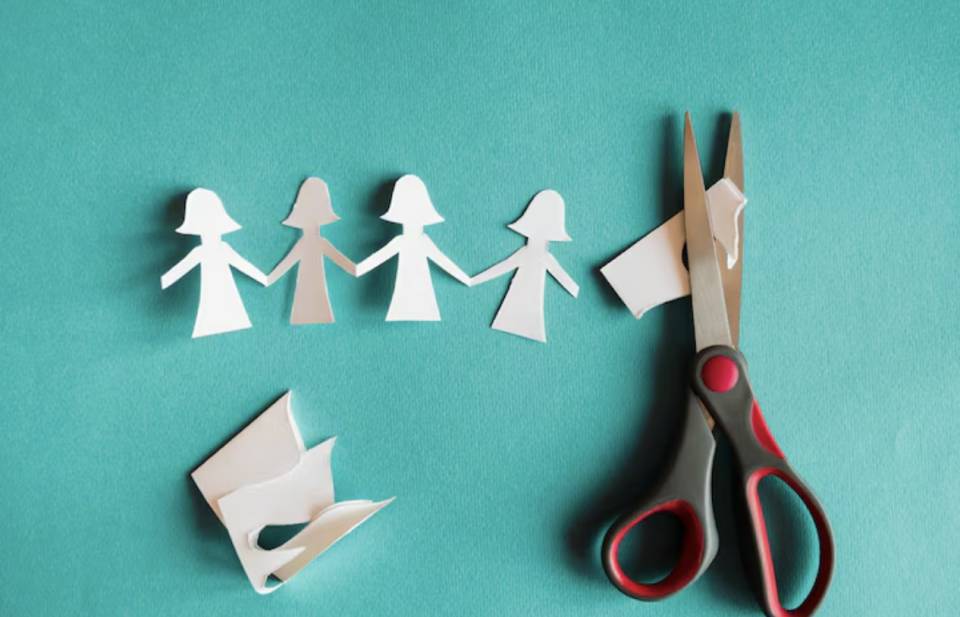
When conflict arises, boundaries are crossed, or deep vulnerabilities are exposed, the human nervous system naturally shifts into a protective survival mode. For many individuals, the most immediate defense mechanism against emotional overwhelm is sudden relational severing—commonly known as cutting people off. While isolating oneself or terminating a connection can offer an immediate sense of relief, using relational cutting as an automatic reaction to emotional discomfort often stems from unprocessed trauma, poor conflict resolution tools, or a dysregulated nervous system.
The term "trauma" is widely discussed in modern culture, yet its clinical reality is often misunderstood. Many people assume trauma only results from catastrophic, once-in-a-lifetime events such as surviving a natural disaster, severe physical violence, or a major accident. In a neurobiological and psychological sense, trauma is not defined merely by the external event itself, but by the nervous system's internal response to an event that overwhelmed its capacity to cope. Trauma occurs when an experience or a cumulative series of chronic experiences, disrupts your internal sense of safety, leaving your brain and body stuck in a state of unresolved threat long after the danger has passed.
Grief is not a disease to be cured, it is a profound and organic human experience that requires space, patience, and understanding. When we lose something vital to our existence, our entire internal landscape is disrupted, and while well meaning society pressures us to move on quickly, true emotional restoration demands the exact opposite.
Human touch carries a profound biological and psychological mechanism capable of transforming our mental baseline. When we experience chronic stress, our nervous system enters a state of high alert, accelerating our heart rate and elevating anxiety levels, and a sustained hug acts as a natural grounding intervention, sending immediate signals of safety to the brain.
We do not enter adult relationships as blank slates, but rather carry an embedded psychological blueprint that dictates how we respond to intimacy and handle conflict. This blueprint, known as your attachment style, is formed during infancy based on your interactions with primary caregivers and shapes how secure you feel in your current partnerships.
Children are natural observers, learning far more from what their parents do than from what they say. When a parent encounters stress, their visible reaction becomes a live demonstration of how to handle adversity, and managing frustrations with calm provides children with a blueprint for resilience.
Connect with a licensed therapist today.
We use cookies to see how you use our website, improve it, and measure our ads.